First prove there was citizenship to lose
For a pre-1920 emigrant, begin with acquisition. The 1920 Act did not turn every person born in territory now within Poland into a Polish citizen. Residence, domicile, prior citizenship, treaties and individual history can matter.
An early emigration date is a research flag, not a complete legal conclusion. Equally, a Polish birth act is not enough to clear it. Identify the specific basis on which citizenship may have been acquired, and collect evidence relevant to that basis.
31 January 1920 to 18 January 1951
Under the 1920 Act, acquiring foreign citizenship could cause loss. The law also contained a provision concerning people liable for military service, making a simple “naturalized, therefore lost” answer unsafe. Establish the naturalization date, age, service status and any permission before drawing a conclusion.
Marriage, legal parentage, and foreign military or public service can introduce separate questions in this period. Record each event in order. The child’s birth relative to the event can matter as much as the event itself.
From 19 January 1951: use the later law
The 1951 Act changed acquisition and loss rules. Foreign naturalization is not a universal automatic-loss test for this later period. Permission to change citizenship and the circumstances of a child born to parents of different citizenships can require separate analysis.
The 1962 Act changed the framework again. Do not apply today’s rule backward to an earlier birth or apply the 1920 rule to a postwar event. A timeline should identify which law needs examination at each step.
Some cases need documents a short quiz cannot evaluate
Former eastern-territory cases may involve nationality, residence and state-successor questions. Emigration to Israel in the postwar decades may involve permission documents and historical resolutions. These are reasons to gather more evidence and request legal review.
Our checker deliberately treats missing or exceptional facts as unresolved. Its result describes a potential issue. It cannot interpret a complete citizenship file, determine the authenticity of a document or replace an authority’s decision.
- Keep nationality, ethnicity, birthplace and citizenship separate.
- Distinguish a foreign citizenship application from the final grant.
- Preserve official permissions and travel documents, including annotations.
Turn a risk into a record request
For naturalization, find the court or issuing authority and the final date. For a maternal line, find the birth and marriage evidence needed to understand the legal parent-child relationship at that time. For military questions, identify the service and citizenship records that actually survive.
Prioritize the fact that could change the result. If one missing naturalization record determines whether an entire branch deserves more research, seek that record before commissioning several additional generations of parish searches.
How to read your result
A promising signal means the information supplied has not exposed a particular obstacle; it does not mean every legal requirement has been proved. A caution means a specific fact or rule needs attention. A serious risk means there is evidence of a potentially broken route, subject to proper review.
The $79 Pre-check turns those signals into a facts-only risk map using your existing documents. Its value is a focused next step, including an honest recommendation to stop or investigate another ancestor when that is the better use of your budget.
A strong birth finding cannot clear a later loss event
Karol’s 1828 act supplies a birth date and names his parents. It contains no evidence about citizenship under the 1920 Act, later naturalization, or transmission to a modern applicant. The sample demonstrates why a documented family link and a completed loss-trap review must remain separate pieces of work.
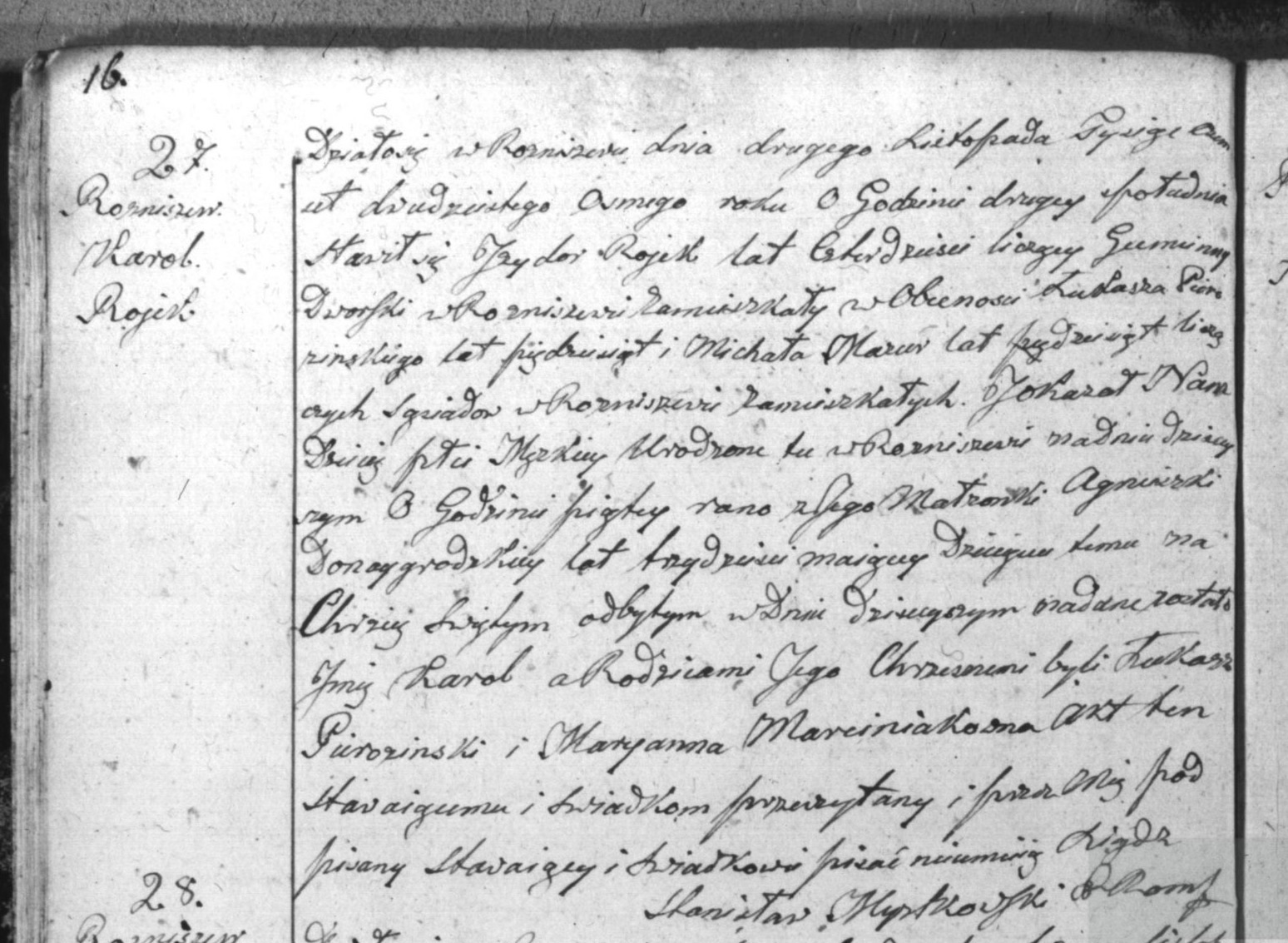 27ROZNISZEW, POLAND · 2 NOV 1828
“Dziecięciu temu na Chrzcie Świętym […] nadane zostało Imię Karol”
At holy baptism, the child was given the name Karol.
Historical family research. This record does not establish any modern applicant’s citizenship eligibility.
Read the full record cardSources & review date
Research guidance reviewed 22 October 2026. The linked laws and official instructions take priority. A historical record establishes the facts it contains; a citizenship authority or qualified legal adviser applies the law to the complete case.
Article reviewed . Linked authorities may revise their instructions after this date.
- Official text: Polish Citizenship Act of 1920
- Official text: Polish Citizenship Act of 1951
- Official text: Polish Citizenship Act of 1962
- US National Archives: naturalization records
- Polish Ministry: confirmation procedure, domestic fees and timing
- Original sample scan: Rozniszew, birth act 27/1828
